By Jose Hernandez – Chicago Realtor with 20+ years of experience · Updated November 2026
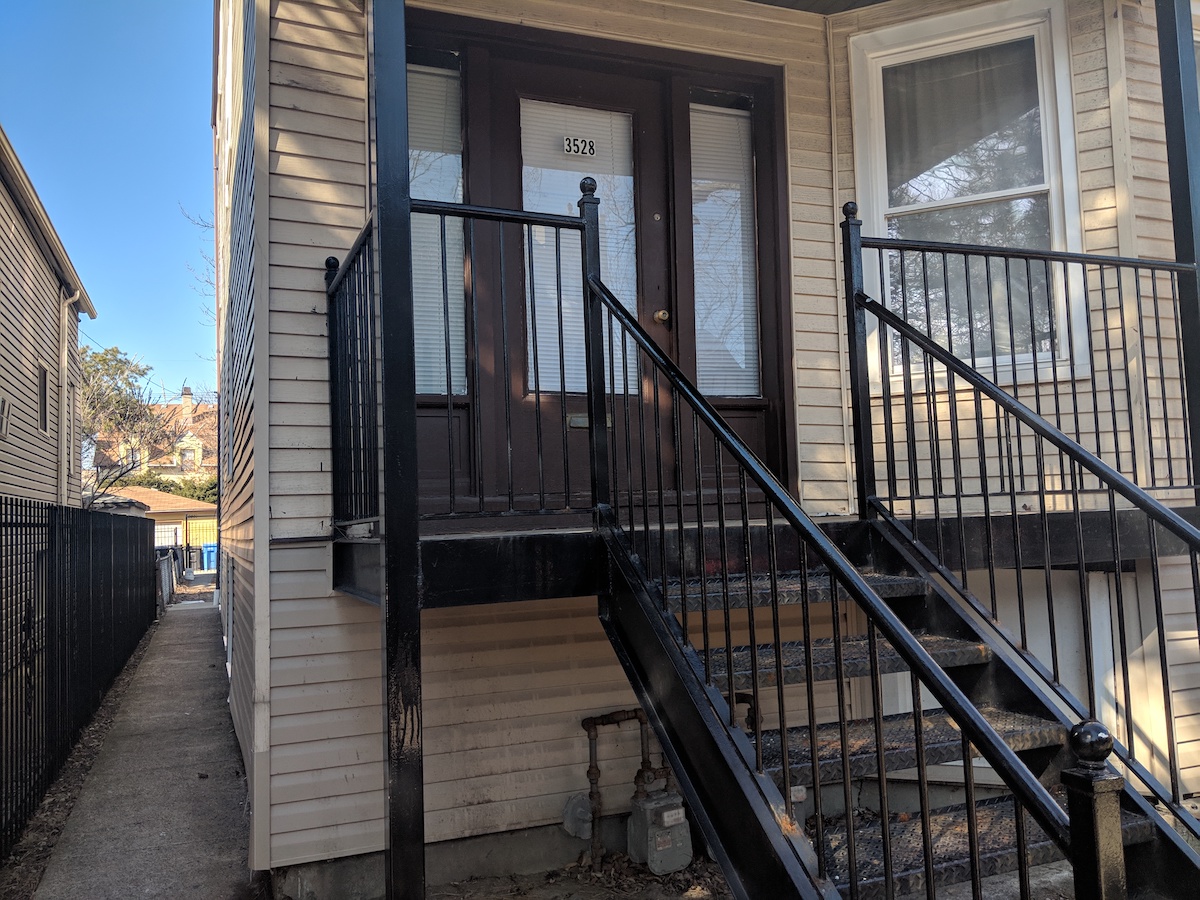
Not every building sells in a weekend with multiple offers. This Logan Square 3-flat at 3528 W Belden Ave had open City of Chicago violations, needed major work, had tenants in place, and went under contract more than once before it finally closed. I was the listing broker. Here is how the sale played out and what other owners of buildings like this can learn from it.
The sale at a glance
- Property: frame 3-flat built in 1901, 3 units (two 3-bedroom, one 2-bedroom), on an oversized 37 x 126 lot
- Condition: open city violations; sold as-is
- Listed: April 10, 2019 at $599,000; reduced to $475,000 on May 20, 2019
- Contracts: under contract more than once; one investor buyer defaulted
- Final contract: November 4, 2019
- Closed: January 9, 2020 for $420,000, cash
- Market time: 209 days
The Challenge: Violations, Deferred Work and Tenants
The owners had held the building for many years. It was structurally solid but needed a lot: the units were dated, and there were open city violations that any buyer would have to deal with. Two units were rented month to month, so showings had to be scheduled with notice and the buyer would take the building with tenants in place.
That combination narrows the buyer pool. Most owner-occupant buyers using FHA or conventional loans can’t finance a building in that condition, which leaves cash investors and rehabbers. They price in every repair, every violation and the time it takes to fix them.
Step 1: Disclose Everything and Price for the Real Buyer
We listed the building as-is and put the violations in front of buyers from day one, with the list available to every agent who asked. Hiding them only leads to a renegotiation or a cancelled contract after the buyer’s attorney orders the city records. (For more on this, see how to read a city inspection report when selling a 2-flat or 3-flat.)
The first price was set with room to negotiate. Feedback from buyers who toured the building told us the price had to come down. With the violations still pending, only a limited number of buyers were willing to take on the problem, and a typical buyer would not touch it. About six weeks in, the sellers and I decided to reduce the price from $599,000 to $475,000, and that brought in offers.
Step 2: Contracts That Fell Apart
The building went under contract more than once before it closed. One contract kept it off the market for about four months, from late May to late September 2019, before it fell through. One investor buyer defaulted on the contract.
When a buyer defaults, the earnest money doesn’t automatically go to the seller. In Illinois, a broker holding the earnest money can’t release disputed funds on their own: it takes a written agreement signed by both sides, a disbursement procedure spelled out in the contract, or a court order. In this case, the parties reached an agreement and my seller kept half of the earnest money. That doesn’t make up for months off the market, but it was better than nothing and avoided a court fight.
What I’d tell any seller of a building like this: ask for meaningful earnest money, proof of funds up front, and short inspection and attorney review windows. An investor with real money at stake is less likely to walk away.
Step 3: Back on the Market and Closed in Cash
The building came back on the market in early October 2019. On November 4 we accepted a cash offer, and the sale closed on January 9, 2020 for $420,000. That was about 88% of the final list price and about 70% of the original list price. It was not the number the sellers first hoped for, but it was a clean cash close on a building with violations, tenants and a failed contract behind it, and the sellers were able to move on.
Update (November 2026): What Happened to the Building
After the sale, the building was gutted to the studs, and it got a new roof and new electrical panels for each unit. According to the MLS, it was listed again in July 2021 as a renovation-ready shell and sold in February 2022 for $525,000.
That’s a common path for buildings like this: the first buyer takes on the violations and the heavy work, then sells or rebuilds. For an owner who doesn’t want to manage a gut renovation, selling as-is to that buyer is often the right call.
The Logan Square multifamily market today is much tighter. In the 12 months ending November 2026, about 167 multifamily buildings sold in Logan Square at an average list price of about $822,000, and about 22 were for sale as of November 27, 2026 (MLS data, based on list prices). See the latest numbers in the Logan Square multifamily market report and current Logan Square 2-flats and 3-flats for sale.
Lessons for Owners of Older Chicago Multifamily Buildings
- Know your violations before you list. Pull the city records first so you can price for them, and so they don’t surprise a buyer mid-contract. See selling with code violations in Chicago.
- Listen to buyer feedback. Showings tell you who the real buyer is. For a building with pending violations, that’s usually a cash investor, and the price has to work for them.
- Protect yourself in the contract. Earnest money, proof of funds and tight deadlines matter more when the buyer is an investor.
- Plan for the tenants. Leases transfer to the buyer. See selling a 2-flat or 3-flat with tenants.
- Know your net. Use the seller net proceeds calculator to compare selling as-is with fixing first.
For another as-is multifamily sale, read how I sold a Summit 4-unit with village violations.
Frequently Asked Questions
Can you sell a Chicago 3-flat with open city violations?
Yes. Many older buildings sell as-is with violations, usually to cash investors who plan to make the repairs. Disclose the violations up front and price for the cost and time to fix them. Your attorney will address how open violations and any pending case are handled at closing.
What happens to the earnest money if a buyer defaults in Illinois?
The broker or escrow agent holding it can’t simply hand it to the seller. Disputed earnest money is released only with a written agreement signed by the buyer and seller, under a disbursement procedure written into the contract, or by court order. Many disputes end in a negotiated split, as this one did.
Do tenants have to move out when I sell my building?
No. Leases, including month-to-month tenancies, transfer to the new owner, and the buyer takes over as landlord along with the security deposits. Any change to the tenancy has to follow the lease and Chicago’s landlord-tenant rules.
Should I renovate my 3-flat before selling it?
Not always. If the building needs a gut renovation, most owners net more time and less risk by selling as-is to a buyer who will do the work. Compare the repair budget and carrying costs against the as-is price before deciding.
Sources: MRED MLS records for 3528 W Belden Ave (MLS #10338537, closed January 9, 2020, and MLS #11144779, closed February 2, 2022); Logan Square multifamily data from MLS, November 27, 2026, based on list prices; Illinois earnest money rules: 68 Ill. Admin. Code 1450.750 and Illinois Realtors guidance on escrow disputes. This article is general information, not legal advice. Talk with a real estate attorney about your situation.

Own a Building That Needs Work?
Jose Hernandez · Chicago Realtor® · Coldwell Banker Realty · 312-788-7079
I’ll review your violations, tenants and recent Logan Square sales, and show you what you could net selling as-is versus fixing first. Se habla español.